The central narrative revolves around a fictional activist known as A.S.A/P, a courier who moves through political and geographical boundaries. The work unfolds through fragments: phone calls, rehearsals, testimonies, bureaucratic rituals, and choreographed movements that never fully reveal their purpose. Michal’s practice often explores hidden infrastructures and ambiguous moral economies, and this project draws the viewer into the mechanisms of movement, trust, and complicity.
The Process
Dear A.S.A/P was the fourth project I shot with Michal, and by this point we had already developed an internal language - a shared sense of rhythm, trust, and an understanding of her aesthetic preferences. That familiarity was essential, because this work operated in a space where scripted structure and intuitive action constantly met.
Michal’s script was intentionally sparse. The choreography was rehearsed in advance, but much of the interaction was left open: dancers executing precise, coded gestures, alongside moments that unfolded freely in the room. Within this environment, Anne Schwetter — an art historian — performs the role of a curator encountering the scene in real time. My responsibility as cinematographer was to support this delicate balance, allowing the ambiguities of performance, observation, and interpretation to coexist inside the frame.
The Exhibition Space
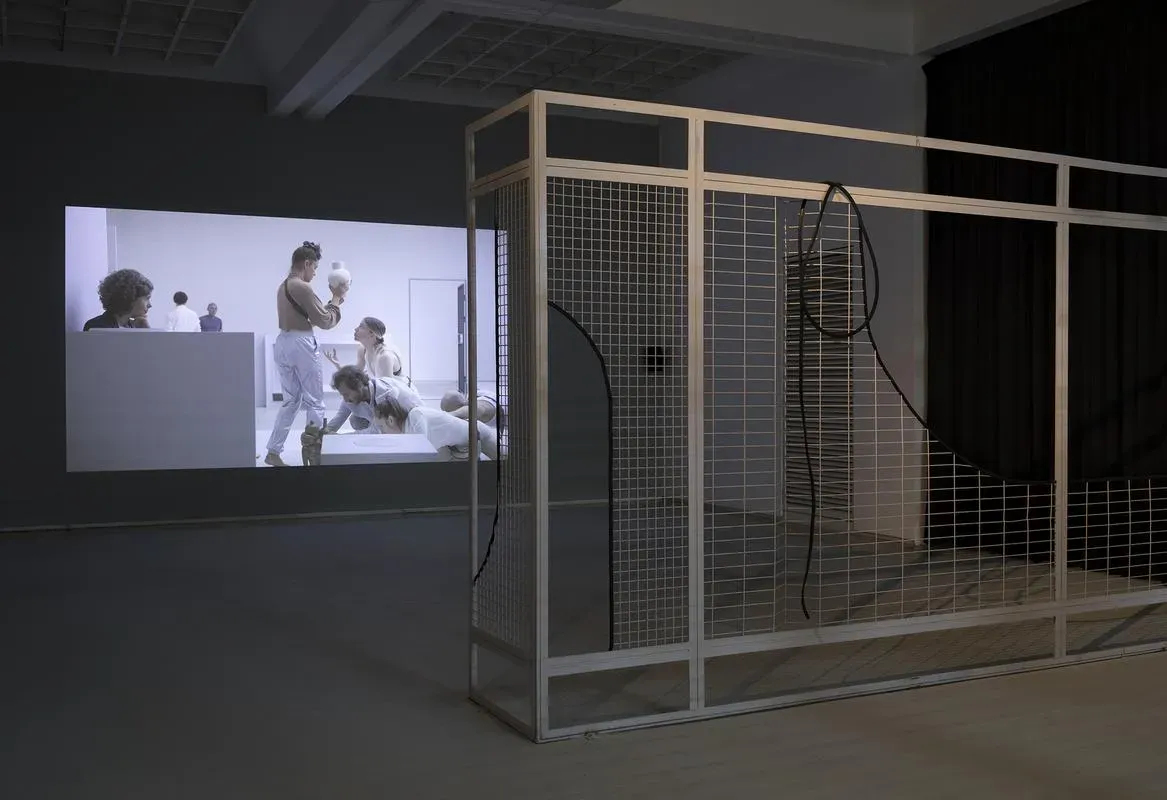
We shot the entire work inside the same museum space where it would ultimately be exhibited, which meant the room itself became part of the narrative and the cinematography. The Tel Aviv Museum of Art gave us only two days between exhibitions - a tight window in which we had to build the set, light the space, and film the work from start to finish.
“The project unfolds through movement, scripted gesture, and fragments of narrative that invite the viewer into a space of coded communication.”
Michal Helfman, Artist Statement
Because the script left much of the staging open, I arrived without a fixed shooting map. Instead, I had to understand the choreography as it unfolded and determine camera placements in real time. Like Anne within the performance, I was also discovering the logic of the space moment by moment — navigating between choreographed structure and the spontaneity of what unfolded in front of us.
Lighting & Visual Approach
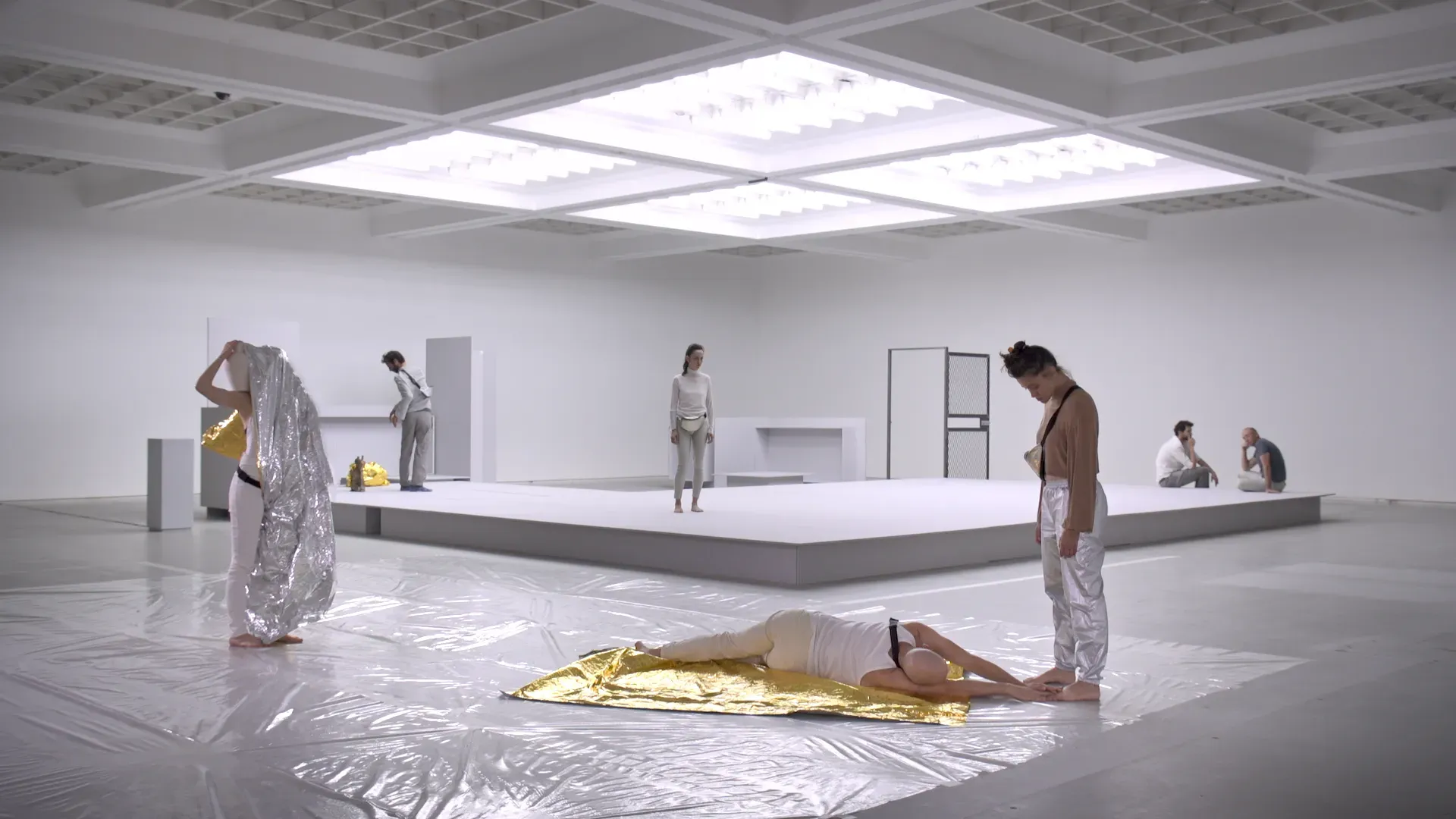
Given the changing nature of the performance, I chose a white-box lighting scheme built around practical neon fixtures mounted directly onto the museum ceiling. These lights served as visible architectural elements while providing soft, even illumination across the central performance area. This setup gave the performers freedom to move without worrying about marks or light positions, and it allowed us to maintain consistent visibility without interrupting the natural flow of the space.
Outside the central “stage,” I kept the lighting minimal - leveraging soft contrast, bounce, and the existing museum architecture to maintain a sense of spatial authenticity. The goal was to create a lighting environment that felt neutral yet charged, capable of supporting both choreographed action and improvised moments.
Camera Setup & Shooting Strategy
To stay agile under the time constraints, I rented two Sony PXW-FS5 cameras paired with Angénieux zoom lenses - a combination that allowed fast changes in focal length and framing as the performers moved. For wider establishing perspectives, I used a Zeiss 20mm prime. I also rented a doorway dolly to create smooth tracking shots that could navigate the tight angles of the exhibition space.
I brought in cinematographer Emmanuelle Mayer as second camera - someone whose eye and judgement I trust deeply. With two cameras, our main task was constant: to determine where each camera needed to be at every moment, and how to frame the action so the improvised elements could breathe without sacrificing the clarity and precision of the choreographed sequences.
The break between the two shooting days allowed me to refine the plan and create a shooting structure that held space for both: the spontaneous, unpredictable gestures and the more carefully composed, deliberate movements. It became a process of continuous adjustment and dialogue with Michal - a balance between intention and discovery.
Insights & Impact
This project taught me a lot about working between structure and improvisation. The performers moved in and out of rehearsed choreography, and I had to stay alert and responsive, adjusting the camera in real time. It felt closer to shooting a live event than a staged film.
My role became finding the balance: keeping the visual structure clear, but leaving enough space for the unexpected. Letting the intuitive moments happen without losing the intention of the piece. That tension — between planning and reacting — became central to the way I approached the work and ultimately shaped the energy of the final video.
Working Between Structure and Intuition
Working on Dear A.S.A/P clarified how much of my cinematographic practice lives in the space between structure and intuition. Projects like this demand precision without rigidity — a readiness to respond, adapt, and frame meaning as it emerges rather than forcing it into place. Collaborating closely with Michal reinforced the value of trust, shared language, and attentiveness to the moment. It’s an approach I continue to carry forward: building enough structure to support the work, while leaving room for uncertainty, spontaneity, and discovery to shape the final result.